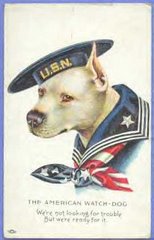
Rebuttal on the Handout
'Pit Bull Terriers and Other Bully Breeds' Trish King, Behavior & Training Dept. Marin Humane Society
[This handout includes vague language and sweeping generalizations regarding canine behaviors that may or may not be attributed to any specific breed and that are more likely due to a lack of breed specific knowledge. Our rebuttal comments are in ORANGE and inserted in brackets [ ] where appropriate.
First it should be well-established at the onset of our rebuttal that “pit bull” refers to a type of dog, not a breed. It actually encompasses several breeds and anything that has a certain look regardless of the actual lineage. The actual purebred names are the American Pit Bull Terrier (registered by the UKC and ADBA) and the American Staffordshire Terrier (registered by the AKC)]
There is a lot of prejudice - even hysteria - in the U.S. right now with regard to Pit Bull Terriers and other dogs like them. Our shelters - especially in urban areas - are filled with pit bulls and pit mixes. Very few of them are adoptable, and even fewer are actually adopted. Those that are adopted are often the objects of fear and distrust. [In my experience – from a rural perspective, not urban, far more pit bulls are adoptable than not. A great many pit bulls are social, gregarious and friendly but the lack of space in rescue organizations coupled with limited space and no-adopt policies in high kill shelters allow for far less to be saved than could be in a different world. ]
There are several reasons for this, but the reasons are all controversial, and your belief depends a great deal on your view about behavior - whether it's caused by nature or nurture, and whether one can modify behavior that has already been in place through late adolescence or social maturity (between 1.5-2 years). [I hedge my bets with nature.
This breed is overwhelmingly a resilient breed that can withstand the worst treatment and still come out a people loving fantastic companion dog. When you start talking about pit mixes - the waters can become very cloudy because the dog in question will have the traits of more than one breed and the mixes of these traits can have an undesirable outcome.
When discussing temperament testing results with regards to the American Pit Bull Terrier and the American Staffordshire Terrier, these breeds consistently seem to score higher than other “family friendly” breeds such as the cocker spaniel and Labrador retriever. For more information visit the American Temperament Test Society - www.atts.org]
Many bully-type terriers were originally bred to fight other dogs, to bait bulls, or for other "blood" sports. [Many of our canine companions were originally bred for purposes other than strictly “as a family pet”. All dog breeds were created with a specific purpose in mind and many of popular and “non bully” breeds have a bloody history including hound dogs.] Some breeders have been assiduous in breeding out the tendencies for aggression, but others actually breed for it - and the best way to get an aggressive dog is to breed two aggressive dogs to each other. The reasons for breeding aggression are varied - some people want their dogs to fight other dogs, some to guard their property, and some seem to want the "aura" of owning an aggressive dog. [This is where the widespread lack of understanding of the breed has become a serious handicap to all involved. The American Pit Bull Terrier was never meant to be a guard dog nor a dog that is aggressive to people for any reason. In fact it is quite the opposite. Pit bulls are often targets of theft because, if correct in temperament, they are incredibly people friendly and trusting of humans. Thanks lack of breed knowledge, the incorrect impression of the pit bull as a guard dog continues to be maliciously spread, to the detriment of the breed. The true APBT is a very people soft, gregarious, easy to train dog, with tendencies for intolerance towards other animals. This breed was never intended as a guard dog and is often stolen if left unattended.
The media has also played an important role in promoting the "ghetto dog" image of the American Pit Bull Terrier, which unfortunately may become a self fulfilling prophecy. More and more, people are believing the hype and aren’t taking the time to understand the true nature of this breed. This can take its toll and manifests in poor breeding practices and un-educated ownership. I feel as though this bears repeating – The American Pit Bull Terrier was never intended as a guard dog or a protective dog. Temperamentally sound American Pit Bull Terriers do not excel in this capacity.]
Dogs bred as pets for several generations tend to lose the behavior patterns that are the most problematic. Unfortunately, they are still feared because of their looks, and because many - if not most - bully dogs still retain some of their undesirable behavior patterns. [Each generation it seems has the bad dog du jour with a junkyard image, this generation is no different. Most people can remember the hysteria surrounding the German Shepherds and the Dobermans in the 70s and 80s, now the dog du jour is the “Pit Bull”]
Bully breeds have several desirable characteristics that build breed loyalty in their owners or guardians, such as:
extreme loyalty
affection to their owners
ease of training
[Also, don't forget: gregarious, people friendly, outgoing and social, athletic. A pit bull with a correct temperament enjoys meeting people and making new friends and bonds easily with its owners.]
Undesirable and/or anti-social behavior patterns include:
The tendency to chase things that move (animals, people, etc) [All dogs are hunters and predators and most will chase things that move quickly and/or erratically, even a Labrador or other popularly viewed “family friendly” dogs. Yes, Pit Bulls can have a high prey drive, however, there is a big difference in aggression towards animals and aggression directed towards people. These behaviors are separate and distinct and one does NOT predispose another].
The ability and tendency to bite and hold on – [This is a terrier behavior, jack russels, rat terriers, west highland white, cairn, etc, etc. The behavior is a terrier tendency and not reserved for “pit bulls” alone. ]
The tendency to try and dominate other animals or people by body slamming, mounting and otherwise physically controlling them. [Most performance type breeds require a good amount of training and socialization to be happy, including many shepherd types, border collies and other working dogs. Likewise, pit bulls need a fair amount of physical exercise and can become unruly if not provided with an outlet for their energy. However, though pit bulls can be pushy with other animals, they have been bred to be people soft! This breed is first and foremost a people soft breed – a temperamentally sound APBT will not try to dominate his handlers. ]
Uncontrollable arousal or excitement [“Uncontrollable” is a very deceptive description. We are talking about a performance breed that requires training and exercise just as many other performance breeds require training and exercise. Pit bulls do not have a tendency to re-direct aggression onto their human handlers.]
The first two undesirable characteristics can be classified as "predatory." All dogs have some of this - some breeds more than others. But, in most breeds and breed types, the behaviors are inhibited. For instance, many dogs will chase runners or bicyclists, but they are unlikely to do anything if they catch up - and are easily trained out of the behavior. Truly predatory dogs go through a fairly set series of behaviors that can end up in a serious bite or worse. These dogs are not angry or vicious. Instead, they are obeying an instinct that was essential for hunting [The description of “truly predatory” may be accurate, but it is NOT applicable to pit bulls. More primitive breeds would be predisposed to such predatory behavior but not temperamentally sound pit bulls]. Thus, they are not likely to give any warning and the chase can be amazingly fast. Sometimes they stalk before they chase; other times they don't [stalking before chasing is a herding dog trait: pit bulls are not herding dogs.]. A dog that bites out of fear or anger will virtually always warn its victim - it normally has no desire to bite, it just wants to be left alone [Such behavior is true of ANY dog that is in fear or in pain. It is actually called fear aggression and is undesirable and will render a dog, ANY DOG, un-adoptable].
Predatory attacks are very common in the bully breeds - predation is the main drive used in dog fighting, and it can be lethal. [Which breeds are being included in the bully breed category for this handout? Is this a general classificiation used by the uneducated – anything with a short coat and bulky body with a block head is a “bully breed”? Let be specifically clear about what exactly we are discussing. Some popular guarding breeds or some of the rare mastiffs have been included mistakenly in this category. Pit bulls (specifically the American Pit Bull Terrier and American Staffordshire Terrier) can be prey driven towards small animals and aggressive towards other dogs. At the same time this willingness to take on a challenge by another animal has been cultivated through breeding; these dogs have been bred to be easy to train, easy to handle and very people soft. ]
The third undesirable characteristic of these breeds is "dominating" or "bully" behavior. This stems from confidence. Oftentimes, confident puppies will bully their siblings, and may take away resources (food or toys). They will do the same to members of their own human families [this has not been my experience in the 10 years I have been involved with the breed]. And, if they're successful when they're puppies, they tend to repeat the behaviors when they are grown. [Resource guarding from people is thankfully NOT a typical bully breed behavior. It is a behavior that would/should exclude a dog from a breeding or rescue program. In the 10 years I have been involved with rescue, I have euthanized ONE purebred American Pit Bull Terrier for resource guarding behavior. If you interview others involved with purebred APBT rescue, you will find that resource guarding is not that common of an occurrence.]
The fourth undesirable characteristic - arousal or excitement - is actually the most problematic. Many bully dogs cannot seem to calm themselves down once they get excited. And once they get excited all their behaviors are exacerbated. Thus, if a dog is over-confident and has a tendency to body slam or mount, he or she will really crash into the other dog or person when he's aroused, sometimes inadvertently causing injury. [It isn't clear here if this is an aggression danger or a hyper dog running around and accidentally knocking someone down? or crashing into things and other dogs in a hyper play situation?] He may begin to play-bite, and then bite harder and harder and harder. When you try to stop the behavior, the dog often becomes even more "aggressive." In this way, play can turn into aggression fairly quickly. Research on the brain [whose brain? Dogs, humans or chimps?] has shown that excited play has exactly the same chemistry as extreme anger. [citations? - if heavy word like "research" are used please include references to the proper studies and science documentation] This allows a play behavior to switch quickly into aggression. And, once the dog has become aggressive a few times, the switch is much easier. [the author seems eager to translate “reseach” into “causation” or fact. Excited play may mimic brain chemistry but it does not mean that play causes anger]
----------------------------------------------------------------------------
Our test includes scenarios that allow each of these behaviors to be manifested if they are there. We do not just watch the animals, nor do we try to make them aggressive. What we do is try to anticipate and replicate behavior that occurs in a normal home.
We observe the dog for a substantial amount of time to see whether he is attentive or affectionate toward us. We then show the dog affection (petting), to see if he comes back for more. We then do something the dog is not likely to like but that will not hurt (examining the teeth and hugging). We give the dog objects or food and then ask for it back, or we drop something and then attempt to take it. And we play - we see if the dog retrieves and if he gives up play objects readily when he's excited. We also run around, much as a child would, to see if the dog chases and what he does when he catches up. We then wait to see how long it takes for the dog to cam down, to relax. Lastly, we introduce the dog to one or two other dogs, to see whether he is social to them.
We try to see the whole dog, as much as possible, for the safety and well being of our clients. We do not expect perfection, and will "grade" a dog for different levels of potential owners. [In other words, they do not expect their clients to have any breed specific knowledge. Purebreds were bred with specific goals in mind and understanding how those traits are expressed in the dog you own is crucial to a happy dog/owner relationship, regardless of the breed. This knowledge also impacts methods of training that may be better suited for different breeds]. There are some behaviors that are unacceptable - mostly aggression. If the dog is aggressive towards people in any way, he is not recommended for adoption. In addition, dog to dog aggression is a big mark against the dog as - especially in this country - people want their dogs to lay well with others. [There are many breeds to that do not do well in a "dog park" setting and require more responsibility and vigilance when it comes to interactions with other animals. Unfortunately, dog owners have become selfish and lazy, wanting to satisfy their own desires of having their dog “play” with others while feeling like they are exercising or interacting with their dog. To own a purebred dog, some intelligence regarding dog behaviors and specific breed characteristics is important. Pit bulls are the most popular dog in the United States as well as the most feared and the most legislated against. They are sadly the most misunderstood and until people take time to understand the REAL American Pit Bull Terrier, ignorance will abound with unfortunate consequences.]
Pit bulls and other bully breeds fail most often in the areas of arousal and dog-to-dog aggression. [This is also where breed understanding plays a crucial role in the success of a dog in society. Many breeds are not successful with dog to dog interactions. People who are looking for a generic dog and who will expect nothing from their dog, plan to learn nothing about dog behavior or dog training, and plan to take their dog to the dog park and stand around with a bunch of other people with generic dogs and no behavior knowledge, should stay away from the American Pit Bull Terrier. The American Pit Bull Terrier is a dog that requires more from its owner, it requires an owner to understand the breed. The rewards from the understanding will be tenfold.]
Each and every dog is tested on his own merits. We have and do put pit bulls up for adoption, after a knowledgeable person has fostered him or her for three weeks. [this is not adequate time to get to know a dog, two months is the average requirement (in a foster home) for really truly getting to know a dog and successfully evaluating a dog's personality and adoptability]. We are cognizant of the power of this type of dog - plus many other big dogs - and would rather err on the side of caution than allow a possibly dangers dog into our neighborhoods.
Trish King
Director, Behavior & Training Dept. Marin Humane Society
[Amy Hendrickson
Annabelle’s Second Chance Pit Bull Rescue
www.ascpbr.com]
For other rebuttals on this handout, and breed information please see
http://blog.myspace.com/realpitbull
www.pbrc.net
www.badrap.org
http://badrap-blog.blogspot.com/2007/02/speaking-for-our-dogs.html
http://www.badrap.org/rescue/mhs_response.cfm
Tuesday, February 27, 2007
Thursday, February 22, 2007
MSNBC.com Article: Falcon denies killing girlfriend's pit bull
Falcon denies killing girlfriend's pit bullAtlanta Falcons defensive lineman Jonathan Babineaux denied responsibility on Tuesday for the death of his girlfriend's dog, which led to felony animal abuse charges against the player.http://www.msnbc.msn.com/id/17243353/from/ET/
Sunday, February 18, 2007
Dog saves family from cobra, is killed
Dog saves family from cobra, is killed
By HERBIE GOMEZCAGAYAN DE ORO CITY (Feb 16) – A pit bull terrier proved beyond doubt that a dog can become a man’s best friend when it saved and gave its life for its master’s wife and her grandmother in Barangay Lapasan here.The dog named “Chief,” saved 87-year-old Liberata la Victoria and her granddaughter Maria Victoria Fronteras from a cobra that snaked through an opening in the family’s kitchen shortly around 8 a.m. Monday.On two occasions, the snake was about to attack the women when the dog dashed from a corner and used itself as a shield.Marlone Fronteras, an employee of Nestle Philippines who owned the terrier, said Chief seized the venomous snake in the neck with its teeth and repeatedly slammed it on the floor until it died.The dog was bitten too by the cobra; it died a few minutes later after giving its master a farewell gaze, according to the dog owner’s friends Mare Sabelita and Derf Ian dela Rama.An organization of pit bull terrier owners here, Royale Pit Bull Club-Ancient Fraternal Order of the Pit Bulls Inc., honored Chief and gave it the moniker “grandfather” of all pit bulls in the community.Marlone told the Malaya, that he, his family and members of the pit bull owners’ group gave the dog a “hero’s burial” the same day.“We just waited for the children to arrive from school because they loved Chief so much,” said Marlone.Sabelita said Fronteras’s wife Maria Victoria was teary eyed when she narrated the dog’s “heroism” to friends.“The snake was in front of us., maneuvering a deadly attack,” Sabelita quoted Maria Victoria as saying. “I screamed out loud to ask for help.”Hearing this, the four-year old pit bull terrier dashed from its sleeping area to fight off the deadly snake, said Sabelita quoting Maria Victoria.The cobra fought back and bit Chief at the lower left portion of the jaw. The dog then repeatedly slammed the cobra after it succeeded in immobilizing the snake with its sharp teeth, she said.Dela Rama said la Victoria was watching television when she panicked and alerted her granddaughter. The old lady said the cobra was about to attack her and the dog came to her rescue.Maria Victoria said she saw the cobra expand its neck as soon as she turned the lights on. She said the cobra looked like it was spitting as its inched closer, about a meter away, toward her.De la Rama said the terrier, “out of nowhere,” jumped on the cobra , bit it the neck, and then shook it till it died.Moments later, the dog slouched flat and fainted, spreading its arms and feet on the floor, after killing the killer snake.De la Rama said the dog went wobbly and lost control of its organs some 30 minutes after being bitten by the cobra; it started to urinate and defecate uncontrollably as it grasped for air and panted heavily.The Fronterases sought the help of veterinarian but they were reportedly told that it was too late because the snake bite was near the dog’s brain and the venom had already spread.Sabilita said Marlone rushed home when his wife called him up to tell him of what had happened and the dog’s master was stunned.The Fronteras children, who treated Chief like a member of the family and who called the dog “Kuya Chief,” were deeply affected, according to Sabelita.The last thing Chief did was waggle its tail and gaze at Marlone who had just come from work, said Sabelita.“Chief gave his two deep breaths and died. (It) was fighting and saving (its) last ounces of breath to see a glimpse of (its) master for the last two seconds of (its) life,” added dela Rama.Sabelita said he hoped people would change how they look at pit bull terriers, a breed strongly discouraged in many countries and banned because of their “cruel looks.”We never get the change to know them more,” said Sabelita.
By HERBIE GOMEZCAGAYAN DE ORO CITY (Feb 16) – A pit bull terrier proved beyond doubt that a dog can become a man’s best friend when it saved and gave its life for its master’s wife and her grandmother in Barangay Lapasan here.The dog named “Chief,” saved 87-year-old Liberata la Victoria and her granddaughter Maria Victoria Fronteras from a cobra that snaked through an opening in the family’s kitchen shortly around 8 a.m. Monday.On two occasions, the snake was about to attack the women when the dog dashed from a corner and used itself as a shield.Marlone Fronteras, an employee of Nestle Philippines who owned the terrier, said Chief seized the venomous snake in the neck with its teeth and repeatedly slammed it on the floor until it died.The dog was bitten too by the cobra; it died a few minutes later after giving its master a farewell gaze, according to the dog owner’s friends Mare Sabelita and Derf Ian dela Rama.An organization of pit bull terrier owners here, Royale Pit Bull Club-Ancient Fraternal Order of the Pit Bulls Inc., honored Chief and gave it the moniker “grandfather” of all pit bulls in the community.Marlone told the Malaya, that he, his family and members of the pit bull owners’ group gave the dog a “hero’s burial” the same day.“We just waited for the children to arrive from school because they loved Chief so much,” said Marlone.Sabelita said Fronteras’s wife Maria Victoria was teary eyed when she narrated the dog’s “heroism” to friends.“The snake was in front of us., maneuvering a deadly attack,” Sabelita quoted Maria Victoria as saying. “I screamed out loud to ask for help.”Hearing this, the four-year old pit bull terrier dashed from its sleeping area to fight off the deadly snake, said Sabelita quoting Maria Victoria.The cobra fought back and bit Chief at the lower left portion of the jaw. The dog then repeatedly slammed the cobra after it succeeded in immobilizing the snake with its sharp teeth, she said.Dela Rama said la Victoria was watching television when she panicked and alerted her granddaughter. The old lady said the cobra was about to attack her and the dog came to her rescue.Maria Victoria said she saw the cobra expand its neck as soon as she turned the lights on. She said the cobra looked like it was spitting as its inched closer, about a meter away, toward her.De la Rama said the terrier, “out of nowhere,” jumped on the cobra , bit it the neck, and then shook it till it died.Moments later, the dog slouched flat and fainted, spreading its arms and feet on the floor, after killing the killer snake.De la Rama said the dog went wobbly and lost control of its organs some 30 minutes after being bitten by the cobra; it started to urinate and defecate uncontrollably as it grasped for air and panted heavily.The Fronterases sought the help of veterinarian but they were reportedly told that it was too late because the snake bite was near the dog’s brain and the venom had already spread.Sabilita said Marlone rushed home when his wife called him up to tell him of what had happened and the dog’s master was stunned.The Fronteras children, who treated Chief like a member of the family and who called the dog “Kuya Chief,” were deeply affected, according to Sabelita.The last thing Chief did was waggle its tail and gaze at Marlone who had just come from work, said Sabelita.“Chief gave his two deep breaths and died. (It) was fighting and saving (its) last ounces of breath to see a glimpse of (its) master for the last two seconds of (its) life,” added dela Rama.Sabelita said he hoped people would change how they look at pit bull terriers, a breed strongly discouraged in many countries and banned because of their “cruel looks.”We never get the change to know them more,” said Sabelita.
Sunday, January 14, 2007
FEDERAL BILL INTRODUCED IN NEW CONGRESS - FELONY ANIMAL FIGHTING
|

FOR IMMEDIATE RELEASE
Senators Cantwell, Ensign and Specter Introduce Animal Fighting Legislation
Bill Mirrors House Version Which Has Already Attracted More than 210 Cosponsors in First Week of Congress
WASHINGTON (January 11, 2007) – Today, U.S. Senators Maria Cantwell (D-Wash.), John Ensign (R-Nev.) and Arlen Specter (R-Pa.) introduced legislation to strengthen the federal animal fighting law, which will help law enforcement agencies crack down on the gruesome blood sports of dog fighting and cockfighting. Animal fighting often involves other organized criminal activity and is found nationwide among urban and rural communities. Senators Richard Durbin (D-Ill.), David Vitter (R-La.), Wayne Allard (R-Co.), Susan Collins (R-Maine), Jon Kyl (R-Ariz.) and Carl Levin (D-Mich.) are original cosponsors of the bill, the Animal Fighting Prohibition Enforcement Act. Senators Ensign and Allard are the only two veterinarians in the Congress.
“Animal fighting is a gruesome and barbaric activity, and federal legislation is needed to combat a surge in the practice throughout the nation,” stated Wayne Pacelle, president and CEO of the Humane Society of the
Last Thursday, U.S. Reps. Elton Gallegly (R-Calif.), Earl Blumenauer (D-Ore.) and Roscoe Bartlett (R-Md.) introduced identical legislation in the U.S. House of Representatives. Their bill, H.R. 137, already has more than 210 cosponsors -- a remarkable achievement in the first week of Congress.
Despite overwhelming bipartisan support in the 109th Congress, including a unanimous vote in the Senate and co-sponsorship by 324 Representatives, the legislation did not come up for a vote in the House before Congress adjourned in December. Former House Judiciary Committee Chairman Jim Sensenbrenner blocked consideration of the legislation in the 109th Congress.
The bill establishes a felony-level penalty of up to three years jail time for any interstate or foreign transport of animals for fighting purposes. Current federal law includes misdemeanor penalties for such actions. The bill also makes it a crime to move cockfighting implements in interstate or foreign commerce.
"Animal fighting is a brutal, inhumane practice and we need to strengthen the current law to make it more effective," said Senator Cantwell. "It's an unacceptable, appalling activity, and too often has connections to other illegal activity such as gambling, drug trafficking and violent crimes."
"As a veterinarian, I have seen the horrible results of animal fighting first hand," said Senator Ensign. "Animal fighting involves the cruel treatment of animals and poses serious health risks for animals and humans alike. These gruesome events are usually accompanied by illegal gambling, illegal narcotics and human violence. Individuals participating in these despicable practices should face criminal charges."
Sheriffs and police departments recognize that animal fighting is an interstate industry often associated with other crimes that require the federal government’s help to curb. In 2006 alone, nine murders related to illegal animal fighting occurred across the country.
The legislation is supported by The Humane Society of the
The need for this legislation has become even more urgent as the illegal transport of cockfighting birds has been linked to the spread of deadly diseases, including bird flu. The only groups opposing the federal animal fighting bill are dog fighting and cockfighting interests.
-30-
Media Contact: Karen L. Allanach (301) 548-7778, kallanach@hsus.org
The Humane Society of the
Friday, January 05, 2007
Monday, January 01, 2007
2006 BSL Wins
2006 Wins
Alabama
Montgomery - decides against BSL
Arkansas
Bald Knob-decides against BSL
Shannon Hills-decides against BSL
Searcy-decides against BSL
Mulberry-decides against BSL
Fort Smith - decides against BSL
Crossett - decides against BSL
Colorado
SB054-doesnt pass
Golden-decides against BSL
Estes Park-decides against BSL
Northglenn-decides against BSL
LaJunta-decides against BSL
Layfayette-decides against BSL
Longmont-decides against BSL
Rocky Ford-decides against BSL
Federal Heights-decides against BSL
Westminster-decides against BSL
Delaware
New Castle County-decides against BSL
Florida
Coral Springs - decides against BSL
Deltona - decides against BSL
Georgia
Rockmart--decides against BSL
Floyd County - decides against BSL
Illinois
Kewanee-decides against BSL
Waukegan-decides against BSL
McHenry County-decides against BSL
Normal-decides against BSL
Paxton-decides against BSL
Forest-decides against BSL
Bloomington-decides against BSL
Will County-decides against BSL
Chicago-decides against BSL
Lincolnshire-decides against BSL
Hodgkins-decides against BSL
Northlake - decides against BSL
Minooka - decides against BSL
Indiana
Anderson-decides against BSL
Indianapolis - decides against BSL
South Bend - decides against BSL
St. Joseph County - decides against BSL
Iowa
Mason City-decides against BSL
Waterloo-decides against BSL
Washington - decides against BSL
Humbolt - decides against BSL
Kansas
Leavenworth-decides against BSL
Witchita-decides against BSL
Emporia - decides against BSL
Merrium - decides against BSL
Olathe - decides against BSL
Kentucky
Frankfort -decides against BSL
Lietchfield-decides against BSL
Milton-decides against BSL
Lincoln County-decides against BSL
Spencer County-decides against BSL
Middlesboro-decides against BSL
Oldham County-decides against BSL
Paintsville- decides against BSL
Park Hills - decides against BSL
Corinth - decides against BSL
Louisianna
Lake Charles-decides against BSL
Sulpher-decides against BSL
Gonzalez - decides against BSL
Massachusetts
Methuen - decies against BSL
Gloucester - decides against BSL
Waltham - decides against BSL
Michigan
Detroit-repealed
Oxford - decides against BSL
Milford - decides against BSL
Mississippi
Brandon - Repealed BSL
Missouri
Belton-repealed
Oak Grove-decides against BSL
Bellfontaine Neighbors-decides against BSL
Unionville-decides against BSL
Jennings-decides against BSL
Raytown - decides against BSL
Sedalia - decides against BSL
University City - decides against BSL
New Jersey
state-TABLED
North Carolina
Watuga County - decides against BSL
Ohio
Lancaster-decides against BSL
East Palestine-decides against BSL
Pennsylvania
Wilkes Barre - decides against BSL
Hazelton - decides against BSL
Erie - decides against BSL
Tennessee
Woodbury- decides against BSL
Tullahoma - decides against BSL
Shelbyville - decides against BSL
Putnam County - decides not to pursue BSL
South Carolina
Bamberg - decides against BSL
Texas
Killeen-decides againt BSL
DeSoto - decides against BSL
Washington
Richland - decides against BSL
Federal Way - decides against BSL
West Virginia
Wheeling - decides against BSL
Wisconsin
Horicon - BSL vetoed
Thursday, December 21, 2006
*Parents: Ferret, not pit bull, gnawed off baby's toes*
http://www.katc.com/Global/story.asp?S=5839156
*Parents: Ferret, not pit bull, gnawed off baby's toes*
BENTON, La. -- A woman jailed after four of her month-old daughter's toes were gnawed off says it was the family's pet ferret that did it, not their pit bull puppy.
"The way the bite marks were on her foot. The ferret being out of its cage. I knew it wasn't the dog," Mary Hansche told KTBS-TV on Tuesday.
Hansche, 22, and her husband, Christopher Wayne Hansche, 26, remained jailed in lieu of $50,000 bond each, booked with child desertion and criminal negligence. Their baby has been released from the hospital and is in state custody.TheHansches were asleep on a mattress on the floor and the baby in a carrier next to the mattress when they woke Dec. 10 because she was crying, Bossier City police have said.Attorney Pam Smart said she is waiting for results of a hair analysis to back up the couple's statement that they were not using drugs."This was an accident, very unfortunate accident. Hindsight is 20-20 and I'm sure the Hansches probably would say we would have done things differently looking back now," Smart said.She also said their bonds are too high for misdemeanors. A bond reduction hearing is scheduled next month.Both pets are in quarantine but show no sign of rabies, officials said.The puppy will remain at the animal control shelter until the court process is completed.
*Parents: Ferret, not pit bull, gnawed off baby's toes*
BENTON, La. -- A woman jailed after four of her month-old daughter's toes were gnawed off says it was the family's pet ferret that did it, not their pit bull puppy.
"The way the bite marks were on her foot. The ferret being out of its cage. I knew it wasn't the dog," Mary Hansche told KTBS-TV on Tuesday.
Hansche, 22, and her husband, Christopher Wayne Hansche, 26, remained jailed in lieu of $50,000 bond each, booked with child desertion and criminal negligence. Their baby has been released from the hospital and is in state custody.TheHansches were asleep on a mattress on the floor and the baby in a carrier next to the mattress when they woke Dec. 10 because she was crying, Bossier City police have said.Attorney Pam Smart said she is waiting for results of a hair analysis to back up the couple's statement that they were not using drugs."This was an accident, very unfortunate accident. Hindsight is 20-20 and I'm sure the Hansches probably would say we would have done things differently looking back now," Smart said.She also said their bonds are too high for misdemeanors. A bond reduction hearing is scheduled next month.Both pets are in quarantine but show no sign of rabies, officials said.The puppy will remain at the animal control shelter until the court process is completed.
Wednesday, December 20, 2006
Holiday Season with your pets
Are you ready for the holidays? Do you buy presents for your
pets? According to a poll conducted by the International Fund
for Animal Welfare (IFAW), 42.3 percent of responders indicated
they plan to buy toys or treats for their pets this year.
Here are some seasonal thoughts for you and your pet.
1. Take your dog for a nice long walk. Pets often feel a
little left out and bewildered by the holiday process and
rushing around making preparations.
2. Make a Kong filled popsicle for your dog. Put kibble in the
kong and add a little bit of cheese, microwave for just a few
seconds to get the cheese soft so it will stick the kibble
together and then put in the freezer to chill. Will keep your
pooch occupied while you open presents on Christmas morning.
3. Be careful when giving your pet Rawhide treats. It is a
source of conflict between dogs if one finishes first and wants
what the other has. Also, they do not digest well and if large
chunks are ingested it could cause medical complications.
4. Make sure wrapping and ribbons are promptly disposed of so
they are not accidentally ingested by our furry friends
5. Make sure chocolaty treats are kept out of your dog's reach.
Chocolate is not good for dogs and the darker the chocolate the
more serious the health consequences. Baker's chocolate is
especially bad. IT is a good idea to use the kong popsicle idea
when you are doing your sweets baking to keep your dog occupied
and out from under your feet during cookie prep.
Tuesday, December 19, 2006
10 Easy Steps for a Dog Safe Holiday Tree
I love holiday trees but I've also seen the danger that they can
represent to pets. I've seen traumas from trees falling on pets,
cut mouths from dogs chewing on glass ornaments, and even had to
send pets to surgery for eating bulbs, garland and tinsel.
Are you putting up a holiday tree this year? If you are, read
this article. Even if your tree is already up - check it out. At
least you will be aware of potential dangers and fix them before
they become a problem.
The article is full of tips on how to create the prefect tree in
your home that is pet-safe. Go to 10 Easy Steps for a Dog Safe
Holiday Tree
(http://www.petplace.com/dogs/10-steps-for-a-dog-safe-holiday-tree/page1.aspx)
Have a great day!
Dr. Jon
Thursday, December 14, 2006
Puppies as Holiday Gifts Are they right for you?
If you want to see the full graphic version of this newsletter,
please click the following link:
http://clicks.aweber.com/z/ct/?8HrVo9KYUmAXIB7PV1KUCw
There is nothing cuter than a holiday puppy. I've seen a few
puppies given as gifts over the year and there is nothing cuter
than seeing a beautiful puppy with a big ribbon around his neck.
Are puppies' good gifts? I had our editors write an article for
our PetPlace.com site to address this issue. I've seen several
holiday pups get returned to the pound over the years and I
don't want this to happen to you.
There are many things to think about when you give a puppy.
First, you need to make sure it is wanted. After all, this is a
gift that they will need to take care of over the next 10 - 15
years! Don't make a spur of the moment decision.
Read this article to see if a puppy is a good gift for the
person on your list. Go to: Think Twice Before Giving Pets as
Holiday Gifts
Until next time...
Dr. Jon
Sunday, November 26, 2006
Pit Bull Puppy Stolen, Mutilated (Longmont, Co)
Pit Bull Puppy Stolen, Returned To Yard Mutilated
Raj Chohan
Reporting
Reporting
(CBS4) LONGMONT, Colo. Police in Longmont have few leads in a disturbing case of animal cruelty.
Someone killed Clarissa Garcia's four month old pit bull puppy, "Copper," then left his remains in her yard. The dog had been mutilated and decapitated.
"He was like family to us," Garcia said. "We've always had pit bulls and they've always been good to us."
It happened overnight on Nov. 12.
The family believes the suspect had to climb a fence to get into the yard.
Garcia said her other dogs almost always bark when someone approaches the house, but that night, she said the dogs were quiet.
"I just really want to find out who did it," Garcia said. "And why they did it."
Police believe whoever stole the puppy, butchered it somewhere else and came back to dump the animal's remains in Garcia's yard.
The Garcia family said they have not had any recent run-ins with anybody in their neighborhood.
Whoever killed the dog faces a felony charge of animal cruelty if caught. Anyone with information should call Longmont police.
Someone killed Clarissa Garcia's four month old pit bull puppy, "Copper," then left his remains in her yard. The dog had been mutilated and decapitated.
"He was like family to us," Garcia said. "We've always had pit bulls and they've always been good to us."
It happened overnight on Nov. 12.
The family believes the suspect had to climb a fence to get into the yard.
Garcia said her other dogs almost always bark when someone approaches the house, but that night, she said the dogs were quiet.
"I just really want to find out who did it," Garcia said. "And why they did it."
Police believe whoever stole the puppy, butchered it somewhere else and came back to dump the animal's remains in Garcia's yard.
The Garcia family said they have not had any recent run-ins with anybody in their neighborhood.
Whoever killed the dog faces a felony charge of animal cruelty if caught. Anyone with information should call Longmont police.
(© MMVI CBS Television Stations, Inc. All Rights Reserved. This material may not be published, broadcast, rewritten, or redistributed.)
Wednesday, November 22, 2006
Thanksgiving Pet Safety
You want to have your buddies with you at Thanksgiving and it will be hard to resist sometimes not giving them some of the goodies but you must be careful!
- cooked turkey meat is safe for dogs to eat, BUT items used to cook the turkey which may be tempting to dogs, such as skewers, string, pop-up timers, and roasting bags are not safe. Swallowing such things can cause an intestinal blockage or perforation.
- No Bones - especially bird bones. All poultry bones splinter easily, and, whether splintered or whole, they can lodge inside or perforate a dog's intestines.
- No Turkey Skin - it is extremely fatty and consuming fatty food like poultry skin can lead to gastric distress and Pancreatitis
- No Over indulgence!- A sudden change in diet, like a big bowl of full of turkey and all the trimmings could cause an upset stomach and diahrrea. If you must share, give just a few pieces of boneless, skinless meat to their food dish.
Saturday, November 18, 2006
Dog attacks raise his fears (not pit bull)
http://www.seacoastonline.com/news/11172006/nhnews-ph-r-dog.fight.html
Dog attacks raise his fears
By Karen Dandurant kdandurant@seacoastonline.com
RYE -- Perkins Road resident Robert Kennedy fears that one day a dog allowed to run free in town is going to attack and hurt his small friend, a friendly, gentle Chihuahua named Bella. "Whenever I walk her, big dogs run up to us, but the thing that stuck and made me speak out happened a few days ago," said Kennedy. "I was walking Bella about 5:30 p.m., when this big black Labrador ran up to us and tried to go for her head. I scooped her up and the dog jumped up on me, putting his paws on my shoulders trying to get to her." Kennedy said he was really frightened either he or Bella would be hurt.
He said he vaguely remembers hearing someone call the dog off. "But it happens all the time," he said. "Bella used to love to walk down Central Road because of a little stream there, but dogs are loose there all the time so we don't walk that way anymore. It happens on the beach, too. I hardly ever see dogs leashed at the beach."
Perkins is asking Rye dog owners to obey the leash law. He said he knows that most dog owners are responsible and that the trouble comes from just a few. "But it is a problem for us," he said. Acting Police Chief Kevin Walsh said his officers do enforce the law when they see a violation. He said he will contact Kennedy and work with him to resolve the problem. "I know that officers will (pick up an unleashed dog) when they see it and bring it to Sagamore Animal Hospital," said Walsh. "... We get calls and if there's a violation, we will warn or ticket the person." Walsh said the town's leash law indicates that dogs must be on a leash or under the immediate control of the owner/guardian of the animal. "I have tried telling people when I see them outside and their dogs are loose to use a leash," said Kennedy. "All it gets me is a dirty look. They say they have invisible fences, but the dogs run right out into the street, so I hope they didn't spend a lot of money on them. Also, I'd hate to see a dog get hit by a car." Kennedy said his mother sometimes walks Bella, and that makes him nervous for both of them. "I'm not sure if she could scoop Bella up quickly enough, and I worry she or my mother will be attacked," he said.
Dog attacks raise his fears
By Karen Dandurant kdandurant@seacoastonline.com
RYE -- Perkins Road resident Robert Kennedy fears that one day a dog allowed to run free in town is going to attack and hurt his small friend, a friendly, gentle Chihuahua named Bella. "Whenever I walk her, big dogs run up to us, but the thing that stuck and made me speak out happened a few days ago," said Kennedy. "I was walking Bella about 5:30 p.m., when this big black Labrador ran up to us and tried to go for her head. I scooped her up and the dog jumped up on me, putting his paws on my shoulders trying to get to her." Kennedy said he was really frightened either he or Bella would be hurt.
He said he vaguely remembers hearing someone call the dog off. "But it happens all the time," he said. "Bella used to love to walk down Central Road because of a little stream there, but dogs are loose there all the time so we don't walk that way anymore. It happens on the beach, too. I hardly ever see dogs leashed at the beach."
Perkins is asking Rye dog owners to obey the leash law. He said he knows that most dog owners are responsible and that the trouble comes from just a few. "But it is a problem for us," he said. Acting Police Chief Kevin Walsh said his officers do enforce the law when they see a violation. He said he will contact Kennedy and work with him to resolve the problem. "I know that officers will (pick up an unleashed dog) when they see it and bring it to Sagamore Animal Hospital," said Walsh. "... We get calls and if there's a violation, we will warn or ticket the person." Walsh said the town's leash law indicates that dogs must be on a leash or under the immediate control of the owner/guardian of the animal. "I have tried telling people when I see them outside and their dogs are loose to use a leash," said Kennedy. "All it gets me is a dirty look. They say they have invisible fences, but the dogs run right out into the street, so I hope they didn't spend a lot of money on them. Also, I'd hate to see a dog get hit by a car." Kennedy said his mother sometimes walks Bella, and that makes him nervous for both of them. "I'm not sure if she could scoop Bella up quickly enough, and I worry she or my mother will be attacked," he said.
Friday, November 17, 2006
Wire and rope binding its neck, pit bull left bleeding by roadside
URL: http://www.news-bulletin.com/news/66659-11-15-06.html
Jackie Schlotfeldt News-Bulletin Staff Writer; jschlotfeldt@news-bulletin.com
Meadow Lake A resident out for his morning walk came across a disturbing sight along Fenceline Road in Meadow Lake Monday. An adult pit bull dog lay bleeding from his nose and mouth, a rope and wire pulled tight around his neck.
The walker immediately called Annie Lawler, who has rescued more than 80 dogs and is well known in Meadow Lake for helping with stray and dumped animals.
When Lawler arrived, the dog was barely breathing. She loaded the dog in her truck and took it to Arrow Veterinary Clinic in Los Lunas for care.
"His face was swollen and his tongue was purple. There was also massive scarring on his back," Lawler said.
Dr. Ralph Zimmerman said the dog will recover from its injuries, but it will take some time.
"There was a lot of swelling around the neck," Zimmerman said. "His mouth was traumatized, his eyes are pretty bulging and he had lots of hemorrhages. God only knows what's happened to this guy."
What happened to the dog may never be known for sure, but Zimmerman said the rope was tied in a slip knot so the dog could have caught it on something and hung himself, in a sort of a hangman's noose.
"He has rope burns around his neck, and they're fresh, so he was fighting it awhile," Zimmerman said. "He bit his tongue, and the vessels in the back of his throat are broken and bleeding. His entire back is scar tissue, which isn't all that old because he still has some scabs over some of it."
The injuries to the dog's back could have been caused by the animal being dragged or perhaps having something hot or caustic poured on him. The veterinarian said the dog is missing quite a bit of skin and not all the injuries are old.
Despite the dog's injuries, Zimmerman said his condition looks a lot worse than it is, and right now his rescuers want to keep him hydrated and get him to eat. "It's going to take some time for him to bounce back," he said.
Lawler said that, if it wasn't for Zimmerman, she didn't know what she would do. "He has been my savior," Lawler said. "He knows his business, and he's a class act."
Although Lawler will cover the expense of caring for the dog, Zimmerman said he tries to keep costs down. "I appreciate what she does, and if there's a less expensive way, we will do it," he said. "But if he needs something, then he needs it, and he will get it."
Lawler said the abuse and dumping of dogs in Valencia County is a problem.
"We can't get people to realize that it's not OK to dump an animal and let it die on the side of the road," she said with tears in her eyes. "It's not OK to starve them to death. It's not OK to beat the dog. It's not OK to put a collar on them and chain them in the yard and leave them with no shelter, food or water. It's not OK to not spay or neuter them."
Zimmerman said unfortunately many animals are treated this way. "He definitely deserves a better life than what he's had so far."
The pit bull dog is a young adult less than two years old, Zimmerman said. "He's been real docile," he said. "For all he's been through, he seems pretty easy-going. I've been in and out of his mouth looking for wounds, and he hasn't argued with me yet."
Lawler said she will try to find a good home for the dog, and, so far, she has had some calls about adopting him from as far away as Carlsbad. As of Tuesday morning, the dog was up, eating and drinking and doing well.
"Somebody threw him away like a piece of garbage," Lawler said. "It's not OK."
Sunday, November 05, 2006
Animal Smart NEWS!
http://www.usaweekend.com/06_issues/061105/061105animalsmart.html
Issue Date: November 5, 2006
Issue Date: November 5, 2006
| Animal Smart |
The most misunderstood dogs in America
A look at five breeds often left abandoned. Their worst offense? Their human owners never should have bought them.
By Steve Dale
For some dogs, their only crimes are unrealistic expectations. As a result, they're misunderstood, and some are downright hated. Some breeds have such a bad rep that they need a press agent. Others have such idealistic "Lassie" images that it's nearly impossible to live up to them.
The Humane Society of the United States estimates that 6 million to 8 million dogs and cats are relinquished to shelters annually, and about half of those are euthanized. We don't know which breeds are relinquished most often, but when I asked four dog experts which five breeds they think are most often abandoned, their picks were unanimous and mirrored my own hunches. "My dream is that people would choose the right dog to match their lifestyles," says Ian Dunbar, founder of the Association of Pet Dog Trainers. "Then, once you have that dog, understand what you're dealing with," adds Ledy VanKavage, senior director at the ASPCA. Unfortunately, that doesn't happen enough, and it leads to this list.
Rottweilers. This large dog with a head the size of a small dog can grow up to 27 inches and exceed 130 pounds. "They're big, strong and can be headstrong," Bradley says. "They're not for everyone." Rotties that don't have good training when they'reyoung may have behavioral problems as adults. These dogs suffer from bad press. Some insurance companies increase their homeowner fees for Rottweilers (and often other large breeds, including pit bulls), and people sometimes feel they have no choice but to give up their dogs.
Labradors (and Lab mixes). People expect Labs to be perfectly trained, like the service Labs who team with the visually or physically impaired. "Here's the reality: They were bred to work under difficult conditions and have the drive to swim through ice to get that bird," says Patricia McConnell, author of "For the Love of a Dog: Understanding Emotion in You and Your Best Friend." That's not to say with training and time they don't settle down, but they're not the instant soup people expect. "The expectations are so high, it's difficult to live up to," VanKavage says. "They're great dogs for a fairly active family, but not for elderly Aunt Tilda," Bradley adds. "And because Labs are large, they can easily learn to drag Aunt Tilda down the street." Golden retrievers can have the same problems.
Border collies. "Exercise for border collies is measured in hours, not minutes," McConnell says. "They require a job and mental exercise to go with the physical exercise. An outlet for their intensity is important, or they can develop problems." McConnell rescued a compulsive spinning and licking border collie. The previous owners were unable to meet the dog's needs, and they couldn't cope with what they had. McConnell named her Lassie. Today, Lassie is normal -- normal for a border collie, that is. She has sheep to herd, and she gets plenty of exercise.
Pit bulls (and any dog that resembles one, such as a Staffordshire bull terrier, American Staffordshire terrier or bull terrier). "They're easily the most vilified, even hated, dog," says Janis Bradley, author of "Dogs Bite but Balloons and Slippers Are More Dangerous." VanKavage calls it a witch hunt -- and she ought to know. She has three pit bulls: "They're clowns; they make me laugh." VanKavage says there are instances when pit bulls run up to kids to say "hi," the parent panics, the authorities arrive, and they deem the dog dangerous for no good reason. "If that dog was a golden retriever, nothing would have happened," she says. Bradley goes so far as to equate these situations to a canine version of racism. Many shelter dogs have a pit bull-type look. Rescuing a pit has become trendy, and the experience can go smoothly. "But understand what you're getting into," Dunbar warns. "Some come with difficult-to-deal-with behavioral baggage."
Terriers (and terrier mixes). Many are under 30 pounds, but don't let their size fool you. "It's a whole lot of dog in one package," Dunbar says. "They're dynamic, they're fast, they're tough, and they're actively telling you all about it." Most aren't demure about barking. There's a reason they're sometimes called terrors instead of terriers. "Really, all they require is training," McConnell says. "It's true for all dogs. It's not the dog's fault if it has no training." Although their generally smaller size is suitable to apartment life, sometimes terriers' vocal nature doesn't endear them to neighbors. Certainly, there's no reason for constant barking, but some people actually expect complete silence -- and that's not the terrier way.
Saturday, October 21, 2006
BSL Updates for all Bully owners October 2006
BSL Updates for all Bully owners October 2006
Reply to: comm-223352577@craigslist.org
Date: 2006-10-20, 11:04AM
BSL is alive and well across the USA, despite proof that it does not work. However, BSL is being challenged in Federal Court in both Colorado and CA right now at the Federal level. There are still 2 cases in court in CA against SF ordinance, and one case is also against the Los Angeles ordinance. Non dog owners do not understand how canine laws work, the intent may be well intended, but the results are far from what they will want. The laws will encourage more puppymillers, defective dogs and dogs which are not genetically sound.
Registration is not indicative of sound temperament, and a mixed breed is not somehow less worthy than a purebred based on that fact alone.ACF will not stop fighting for the rights of responsible dog owners/the rights of those who raise well-tempered canines. The law in CO will be proven unconstitutional. (The case is in "discovery" stage right now!)
In addition, Kory Nelson took down his statement alluding to the fact that ACF was a strawman for dogfighters, but he still says anyone who is an advocate of BSL promotes dogfighting. Of course he thinks he can get away with saying anything---but just wait.
Thanks to Nick Van Duren and the others that helped,in Parker CO, for tabling BSL in Parker (Kory Nelson lives in Parker) Tellings v. Ohio Update: The only case to find BSL unconstitutional on 3 separate grounds, the case was appealed to Ohio Supreme Court by the "government"......there has been evidence tampering, Plaintiff's exhibits were either missing or damaged. But the briefs are being prepared for the Ohio Supreme Court, and if the court is too "political" and somehow rules against us, then will appeal to the Supreme Court of the United States for discretionary review. (The court chooses which cases to hear, no automatic right to be heard.)
Reply to: comm-223352577@craigslist.org
Date: 2006-10-20, 11:04AM
BSL is alive and well across the USA, despite proof that it does not work. However, BSL is being challenged in Federal Court in both Colorado and CA right now at the Federal level. There are still 2 cases in court in CA against SF ordinance, and one case is also against the Los Angeles ordinance. Non dog owners do not understand how canine laws work, the intent may be well intended, but the results are far from what they will want. The laws will encourage more puppymillers, defective dogs and dogs which are not genetically sound.
Registration is not indicative of sound temperament, and a mixed breed is not somehow less worthy than a purebred based on that fact alone.ACF will not stop fighting for the rights of responsible dog owners/the rights of those who raise well-tempered canines. The law in CO will be proven unconstitutional. (The case is in "discovery" stage right now!)
In addition, Kory Nelson took down his statement alluding to the fact that ACF was a strawman for dogfighters, but he still says anyone who is an advocate of BSL promotes dogfighting. Of course he thinks he can get away with saying anything---but just wait.
Thanks to Nick Van Duren and the others that helped,in Parker CO, for tabling BSL in Parker (Kory Nelson lives in Parker) Tellings v. Ohio Update: The only case to find BSL unconstitutional on 3 separate grounds, the case was appealed to Ohio Supreme Court by the "government"......there has been evidence tampering, Plaintiff's exhibits were either missing or damaged. But the briefs are being prepared for the Ohio Supreme Court, and if the court is too "political" and somehow rules against us, then will appeal to the Supreme Court of the United States for discretionary review. (The court chooses which cases to hear, no automatic right to be heard.)
Original URL: http://sacramento.craigslist.org/pet/223352577.html
-------------------------------------------------
this craigslist posting was forwarded to you by someone using our
email-a-friend feature - if you want to prevent these, please go to:
http://www.craigslist.org/cgi-bin/te/0FGcukHd0VGbzdXYAl3ah12ZuwWat92Yb
-------------------------------------------------
Friday, October 20, 2006
Pet ban will go further

Published: Sunday October 15, 2006
Pet ban will go further
The Pueblo Chieftain Online
Pit bulls are a common target of breed-specific laws.
Editor's note - La Junta City Council recently voted 4 to 3 to adopt "breed-specific legislation" banning pit bulls from the city.
By NICK VAN DUREN
Tragically, La Junta has joined the growing list of local communities to be targeted by militant animal rights organizations. The proof is that the City Council is flirting with breed-specific legislation.
What everyone needs to understand is that breed-specific legislation is not an end in itself. In fact, it is a "trojan horse" designed to get the extremist agenda of animal rights activism into the language of the law and into the administration of government.
If you're involved with agriculture and ranching, you have a right to be concerned. What everyone needs to understand is that this does not stop with dogs.
Ultimately, the animal rights leadership wants to destroy any and all animal and pet ownership. Their strategy is to squirm into the law by whatever means necessary. And once they get in, the amount of trouble they'll cause is immeasurable.
If you're curious as to why a lot of city attorneys and managers are all for this type of legislation, the reason is that it is designed to appeal to political vanity. Lawyers love the law. The more laws, the better. That is why breed-specific legislation is being paraded around by one of their own: Kory Nelson, a Denver assistant district attorney. He's seduced, misinformed and exploited local governments all over the country.
Where breed-specific legislation is considered, Nelson is almost always behind it. Just as he did in Parker, he'll have no problem embarrassing anyone, so long as it feeds his unending obsession with banning dog breeds. Thankfully, the town of Parker figured it out before it was too late.
Communities should demand answers. Why is your government flirting with an animal rights agenda? Why would lawmakers enact a public relations nightmare, one which has economic consequences which far surpass that of simply restricting dog ownership?
Once a community passes breed-specific legislation, it will gain a bad reputation as unfriendly to families and pets. The best and most responsible of owners will leave, as they've done in Denver and Aurora. They'll take their knowledge, experience and money with them.
The ethics of animal services will be compromised, not because these fine people want to be ruthless, but because they'll have no other choice. Finally, groups such as People for the Ethical Treatment of Animals, the Animal Liberation Front and the image-conscious, but still militant, Humane Society of the U.S., will co-op your city government. Once inside, these socialists will unleash an unending assault on private property and usage rights for their own destructive ends.
No good can come of breed-specific legislation, strict animal ordinances or forcing pet and animal ownership to be less active and open. That is exactly what these groups are banking on. Will your community choose to be fall into their trap?
Nick Van Duren of Parker is Colorado director of Responsible Dog Owners of the Western States.
?1996-2006The Pueblo Chieftain Online
Subscribe to:
Posts (Atom)


 Posts
Posts