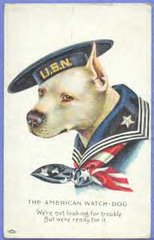
That is so very sad but so typical. She is only worth something in the moment, not the long term. I bet they haven't even bothered to spay her. Losing her home before she's two but that seems to be the standard for the breed. Most don't get to see their second birthday due to irresponsibility like this. There are just too many of them and not enough homes (or I should put it better...not enough caring responsible life long homes. Plenty of people want a pit bull for the 5 minutes it is convenient for them).
Wednesday, January 07, 2009
Positive pit bull story
However, it looks like this family can't be bothered to make moving accommodations for their pet: http://cbs13.com/local/pit.bull.intruder.2.901647.html
Tuesday, January 06, 2009
ALERT for Montana
The American Kennel Club¢s Government Relations Department is expecting legislation in Montana that will seek to prohibit the ownership, harboring, or keeping of dogs described as "pit bulls." The legislation defines "pit bulls" to include Staffordshire Bull Terriers, American Staffordshire Terriers, and "any dog that has the physical characteristics that substantially conform to the standards established for those breeds by the American Kennel Club." If the bill is passed and signed into law, all such dogs would be seized and euthanized. The AKC vehemently opposes breed-specific legislation and encourages all concerned dog owners in Montana to contact their elected representatives and express their strong opposition to this draconian yet hard-to-enforce legislation.
The American Kennel Club supports reasonable, enforceable, non-discriminatory laws to govern the ownership of dogs. We support laws that: establish a fair process by which specific dogs are identified as "dangerous" based on stated, measurable actions; impose appropriate penalties on irresponsible owners; and establish a well-defined method for dealing with dogs proven to be dangerous. The American Kennel Club strongly opposes any legislation that determines a dog to be "dangerous" based on specific breeds or phenotypic classes of dogs.
Currently named LC 1087, the bill will:
- Make it unlawful, with little exception, for a person to own, harbor, or keep a pit bull dog. "Pit bull" is defined in the act to include Staffordshire Bull Terriers, American Staffordshire Terriers, and any dog that has the physical characteristics that substantially conform to the standards established for those breeds by the American Kennel Club.
- Force persons in violation of the bill to surrender their dogs to animal control officials, or risk seizure of the animals.
- Mandate that within ten days of surrender or seizure, the animal control agency shall euthanize such dogs.
WHAT YOU CAN DO:
All concerned Montana dog owners should contact their elected representatives and express their strong opposition to this breed-specific legislation. To find your elected representatives, click here.
For a copy of the bill, click here.
For a sample letter to write or e-mail legislators with, click here.
For a downloadable copy of our Deed, Not Breed flyer, click here.
For more information, please contact AKC¢s Government Relations Department at (919) 816-3720, or e-mail doglaw@akc.org.
Thursday, January 01, 2009
2008 summary
2008 was not all that much better about 2007 for the pit bulls. We have downsized over the past couple of years for personal reasons. Our rescue efforts have diminished even more this year. It was a combination of having less foster homes, busier lives and less people looking to add a pit bull to their lives. The numbers of pit bulls needing assistance has multiplied exponentially and it seems as though shelters have more and more. I can't walk into a shelter without seeing several pit bulls or pit bull mixes in need. When the economy takes a downturn, pets are usually the first to suffer. That itself has seemed to multiply as the months progressed through the year. I have seen larger and larger numbers of older dogs needing homes, which is surprising since the general up keep on a healthy older dog is minimal compared to that of a puppy.
I don't know if the housing crisis has played as much of a hand or if that was used as an excuse to get rid of pets. There have always been problems when people moved with little regard given to whether their pets will be welcome and no regard that their pet will likely lose it's life because of their lack of concern. There are those precious few that are desperate for help and welcome advice on how to make their housing situations better but for the most part that is not the case. Just as many people are acquiring puppies but not as many are maintaining them for their whole lives.
I continue to hope this year improves. 2009 will be better. We have to believe that.
Thursday, December 25, 2008
Pets as Gifts
It's been a long time since we've posted something on the blog so I thought I'd update it with the traditional Christmas sentiment about giving pets as gifts. As many times as I have seen the articles on the Internet and heard people talking about it being a bad idea....it never fails....I see tons of people looking to add that little furry life to the pile of gifts under the tree.
Christmas is a hectic time of cooking, having guests, excited kids for several days starting mid December until after the 25Th. This is not an ideal time to get a pet.
1. This is not your normal routine. There are guests coming and going, the door opening constantly - who is going to watch out for the new puppy or kitten to make sure it doesn't run out the door and get lost? Who is going to make sure the dog goes out on a regular basis so that it doesn't plant it's own present under the tree.
In addition to it not being your normal routine, all this excitement can be scary for a baby animal or an animal that has a soft disposition.
2. All the fatty and chocolaty goodies are not good for your new pet and if things aren't watched carefully, your new pet could find itself very sick. Chocolate is not good for dogs but also bones, raisins, onions, etc. Poisonous plants abound this time of year too.
3. Are you sure that this particular pet is exactly what your loved one wants? Maybe their wanting a dog or cat was a passing thought. Regardless, this is a 10-15 year commitment, and most people would want to pick out their own companion. This pet will be with them for a long time and they should take part in the decision.
Will the excitement of this pet rub off after the holiday and the dog/cat be no longer wanted? When it is no longer cute and is a rambunctious teenager will it end up at the pound? Hundreds of pets are relinquished at shelters in January/February because the families weren't prepared to add a pet to their lives at Christmas time.
Animals are a big deal and they can be very limiting, care always has to be considered. You can't just run off for a weekend without considering who is going to feed and care for the pet. Getting a pet is a life changing event, consider all of the options before you get one.
Tuesday, September 30, 2008
A fight to save urban youth from dogfighting

http://www.usatoday.com/news/nation/2008-09-29-dogfighting_N.htm
By Sharon L. Peters, Special for USA TODAY
The vast majority of dogfighters are not rich and famous like former football star Michael Vick or as organized as the pit masters who schedule high-stakes blood battles that rake in thousands of dollars a night.
The most active and numerous dogfighters, experts say, are 13 or 14 or 17 years old — inner-city youths who have trained their pit bulls to fight other dogs in the neighborhood.
"There are at least 100,000 young kids fighting their dogs under the radar in America," estimates Chicago-based anti-violence advocate Tio Hardiman, who built his estimate on conversations with young dogfighters and authorities in 35 states he has visited. In contrast, about 40,000 adults are involved in organized dogfighting, according to the Humane Society of the United States.
Hardiman, who is a special consultant to the Humane Society and has launched an anti-dogfighting program in Chicago, says large numbers of youngsters are conducting street dogfights "in almost every urban inner city," and the numbers are growing. Among the cities he lists: Chicago; St. Louis; New York; Atlanta; Memphis; Detroit; Jackson, Miss.; Los Angeles; New Orleans; Milwaukee; Baltimore; Charlotte; and Newark.
"The kids are getting younger and younger," says Randy Grim, executive director of Stray Rescue of St. Louis. He roams the worst streets rescuing dogs, most of them scarred-up fight-trained pit bulls discarded because they weren't vicious enough. "I saw a kid in a park, he was probably 8 or 9 years old, training and strengthening his pit bull by having him tread water in a creek."
It's not about the dog
Getting and fighting a pit bull has become a way for inner-city youth to "show their toughness," "develop a reputation in the neighborhood" and "make some money," says Kelly Daley, who led a recent University of Chicago Survey Lab study on dogfighting. Urban kids see dogfighting as a stature builder, and they give no thought to what the animals endure, she says. "This kind of stuff doesn't have anything at all to do with the dog."
Reformed Chicago dogfighter Kione Ford, 16, fits the description. Dogfighting "made me kind of popular," he says. And each time one of his dogs got hurt, "I'd think, 'Well, next time he'll win.' "
Most dogfighting by young people is not the sort described during the Vick episode — big-money events held in well-constructed pits for large audiences. Youth dogfights are usually forced skirmishes between leashed pit bulls on the sidewalks or alleys, or low-stakes unleashed contests in backyards and basements. The results, however, are similar to organized matches: dogs maimed or dying by the thousands every year, enough cash or veneration bestowed on winners to keep them committed, and owners — teens and pre-teens in this case — growing increasingly non-empathetic and violence-prone.
"We've got a whole new generation of criminals coming up as a result of all this," Grim says. Although dogfighting by inner-city kids has been reported for two decades, he says, it is now more prevalent, more enmeshed in the fabric of communities and more appealing to a broader circle of urban youth.
Making dogs fight is "not something that's a thought process at all, it's just something they do" as part of the intertwined activities of violence, says Cynthia Bathurst of Safe Humane Chicago, a coalition aimed at ending inner-city violence against humans and animals. Hardiman agrees: "Violence against dogs doesn't even register."
Life expectancy: 18 months
The Vick case hasn't deterred young urban tough guys. "It actually generated more interest among urban youth," Grim says. Suddenly, kids who had believed dogfighting was only a ghetto or rural Southern sport saw rich role models were involved. "They thought, if (Vick) does it, it's cool."
The fact that Vick got prison time and that dogfighting is a felony doesn't stop them because they reject both as establishment punishment leveled against the disenfranchised, Grim says.
Kids get drawn in at an early age, says Hardiman, motivated by the "glamorization" of dogfighting by rap and hip-hop music and by neighborhood values that prize machismo. They give little value to animals and assert that pit bulls "were born to fight."
"We discovered (in St. Louis) a group that held a dogfight for a church fundraiser, and that sends a pretty strong message to children," Grim says.
A kid gets a pit bull from a breeder who churns out litters in backyards or abandoned buildings, or from a pet store known to have a non-public cache of pit puppies, or they steal animals chained out in a yard or on a fire escape.
The youngster learns from friends or uncles how to turn the animal into a fighter, often starting by setting it against smaller dogs or cats referred to as "pit bait," creatures that almost never survive the encounters. Most kids also do torturous things to their dogs to make them meaner, more pain tolerant, more likely to go the extra mile in battle, says Robert Missari of Rescue Ink, which scours the boroughs of New York for abused animals.
"These kids may make some money on fights," Missari says, "but it's equally about the whole macho thing and security thing of being able to say, 'My dog is the toughest on the block, my pit bull can kill your pit bull.' "
Dogs that are decent fighters may survive several bouts before being mauled so badly they die or are killed. "The life expectancy of an inner-city pit bull is 18 months," says Hardiman. Dogs that won't fight or don't fight well are regarded as "not worthy," and they're shot, hanged or set loose.
Authorities sometimes take a dog away from its owner, but these can be tough cases. There are few witnesses, kids claim they don't know who owns a mauled dog, and there has been a pattern of pleading down cases to misdemeanors, experts say.
Kids can quit
Ultimately, the mind-set of young dogfighters must be changed, Hardiman says. Later this year, he'll take to Atlanta and Charlotte his Campaign to End Dogfighting, which rechannels kids and their dogs to more constructive agility and obedience competitions. He's bolstered by apparent successes that include Ford, who vows he'll never make a dog fight again, and George Brent, 18, who fought his dog Red for months, then hooked up with Hardiman's team. Red earned the American Kennel Club Canine Good Citizenship certification.
Tamaris Jones, 17, says he won't fight again. He and dog Trouble have spent months of Saturdays in Hardiman's program. "They explained to me that it wasn't right to fight him," Jones says. "I would be mad at (Trouble) when he lost, and I'd hug him when he won. Now he's not a fighter no more. I can hug him all the time."
The Humane Society of the United States also is working on other ways to de-romanticize dogfighting, including public service announcements from messengers these kids respect, people who speak their language and understand their lives. Music mogul Russell Simmons has signed on; other like-thinking rappers and sports figures are being contacted.
Grim plans a humane-education camp next summer that will address dogfighting; Rescue Ink is going into the schools this fall with the message; and Bathurst has joined Best Friends Animal Society to spread the anti-violence word in several cities.
"We're creating a movement around seeing these animals in a different way," Hardiman says.
While he insists "80% of inner-city youths love their dogs and don't fight them," he acknowledges that reversing the other 20% is tough. "I get a kid for a few hours, and the rest of the time he's living where he's living, and they're not reinforcing my message, they're doing what they do … fighting dogs."
But he knows some are strong enough to leave fighting forever. His evidence is Sean Moore, 37, who works with him to steer kids onto a different path. Moore was a revered dogfighter from age 13 to 18. Fifteen of his dogs died in fights or he killed them to end their agony after hideous injuries.
"I apologize every day for what I did back then," Moore says.
He left that life when he realized "I didn't want to be a killer no more. It was an ego trip. I sometimes made some money. But I'm just not a killer."
Friday, September 19, 2008
Pit bull saves man from burning Poplar Bluff home
Pit bull saves man from burning Poplar Bluff home
Friday, September 19, 2008Jacob Ford sits on the remains of his front porch where his pit bull "Butch" apparently saved his life last Friday. (Corey Matthews/Daily American Republic ) POPLAR BLUFF, Mo. — After a fire gutted a house and basement apartment Jacob Ford lived in last Friday afternoon, the 20-year-old Poplar Bluff man said he's thankful to be alive, and even more so for the dog he "never really paid any attention to."
Ford was awakened Friday afternoon by the persistent whining of a pit bull owned by his mother's boyfriend, and knew something must be wrong.
Upon climbing out of bed, Ford said, his worst fears were realized.
"As soon as I stood up, I had smoke in my face," he said.
Grabbing a fire extinguisher, Ford headed upstairs, only to find the house's hallway full of smoke as well. He then ran outside to call the fire department and his mother.
Gathering his composure, Ford realized the pit bull, Butch, had saved his life, because smoke alarms in the house failed to sound. Butch, however, was nowhere to be found.
"I went to the top of the stairs twice," said Ford, describing the hysteria of the moment. "I was yelling for Butch at the top of my lungs, but he didn't respond. That's when I figured he was probably gone."
A Butler County firefighter eventually found the dog, still alive, hiding in the smoke-filled basement, and led him to safety.
What's amazing, said Tina Mobley, Ford's mother, is how the dog lost a lifelong fear of basements while attempting to wake her son.
Butch, she said, had been abused as a puppy before she purchased him with "the last $52 I had on me."
The dog, Mobley said, had "only been in that basement one time up until that day," because he was terrified of the place, having been kept locked in one as a puppy.
Mobley, who's raised American pit bulls for years, said the breed gets a bad rap much of the time, but not all of them are troublesome.
"They just need a lot of attention," she said.
Ford agreed, saying pit bulls are "family-oriented dogs if they're raised right."
For Mobley, all the extra work she went through to raise Butch from an abused puppy was worth the effort, and now, she said, she'll be forever indebted to him.
"He's a pretty heroic pit bull," she said. "That's the best $52 I ever spent in my life.
"If it had not been for that dog, there's no doubt in my mind my son would have died."
Mobley said she's doubly thankful for Butch's actions because her son soon will be a new father, something that's weighed heavily on him since the fire.
"I had nightmares Friday and Saturday nights, thinking of what could've happened," said Ford. "The thought kept racing through my head about not being there for my child."
Ford, who said he "couldn't be more grateful," admittedly had never been really close to the dog because it belonged to his mother's boyfriend, Larry Gregory, who also owned the house.
"I didn't realize he was that close to me, though," said Ford. "We're a lot closer. We're buddies now."
For his efforts, Butch received singe marks on his muzzle during the fire, but, Mobley said, apparently has suffered no health problems. He has regained much of his puppy fear, though. "He doesn't want to be left alone now," said Mobley, "because he's scared all over again." Ford hopes to change that, he said, starting with the big steak dinner he's promised his new best friend.

Wednesday, September 03, 2008
Lazy summer?
Has it been a lazy summer? Not exactly, while our rescue has slowed down, we have been busy. We have cut back on our foster homes due to burn out and are only taking in precious few dogs at at time. We've had the opportunity to have some really great dogs come through our doors and we hope to keep it up by only placing those dogs that match the breed's desired temperament.
To our current dogs, Braveheart and Hooch - good luck with your upcoming adoptions and we wish you the best in your new lives.
Monday, July 21, 2008
Verizon Pit-Bull Ad Unleashes Flurry of Complaints
Could this be placed on the blog? Holly
Verizon Pit-Bull Ad Unleashes Flurry of Complaints
Humane Society, ASPCA Say Dogs Depicted Unfairly in LG Dare Spots; Marketer Will Keep Airing Them
NEW YORK (AdAge.com) -- Verizon Wireless has stepped into a steaming pile of complaints from animal lovers over commercials for its LG Dare phone, but the marketer is sticking with the 30-second spot.
Animal-rights groups protest pits' portrayal in ad.
The commercial shows a young man trying to obtain the phone by climbing a junkyard fence, when he is instantly greeted by two pit bulls. The dogs, with cropped ears and metal choke collars, bark ferociously and lunge at the intruder. They are just a hair's breadth away from the phone because their heavy metal chains do not quite extend far enough.
The spot has infuriated groups from the Humane Society of the U.S. -- which has asked Verizon to pull the ad -- to PETA, the ASPCA and dozens of pet-related websites, which have posted petitions and message boards on the web protesting the ad with slogans like "Can They Hear Us Now?"
'Despicable'
Veterinarian Susan Ralston sent Ad Age her letter of complaint to Verizon, which says, in part: "I don't know what your company was thinking. I don't know how much money was wasted on this despicable ad. Perhaps you should donate the million or so spent on that 'creative' to pit-bull rescue in an attempt to undo the damage. I switched my BlackBerry to T-Mobile. Maybe if enough folks do the same, it'll get your attention."
Brenda Raney, a spokesperson for Verizon Wireless, said the ads were never intended to offend. There are two ads that focus on the Dare, she said; the other depicts a woman on a ledge. "These are fictional ads, designed to be over-the-top, to break through the clutter and get our message across." Verizon is not pulling the spots, she said. Interpublic Group of Cos.' McCann Erickson, New York, is Verizon's agency.
Inappropriate and inaccurate
Kathy Bauch, senior director-corporate relations and promotion at the Humane Society, said the ad could further inflame an already outstanding prejudice against pit bulls. "We understand why advertisers use stereotypes. It resonates and people get the point," she said. "But this perpetuates the idea that it is OK to chain dogs and it is OK to have guard dogs."
Mary Harwelik, founder and director of The Real Pit Bull, an education and advocacy organization, said, "This is big news in the pit-bull world. People are outraged." Describing the ad as inappropriate and inaccurate, she said, "Pit bulls are not guard dogs and they were never meant to be guard dogs."
A statement released by the ASPCA in response to the ads says, "These dogs can make wonderful additions to a family. The public also showed their support for the evaluation and rehabilitation of the pit bulls rescued from the Michael Vick case, suggesting that they are ahead of the corporate world in their understanding of pit bulls."
Pit bulls often victims
Mr. Vick, former quarterback for the Atlanta Falcons, was convicted last year on counts of illegal dog-fighting. When authorities raided his home, they found 66 dogs, including 50 pit bulls. While two of the dogs were eventually euthanized, many have been rehabilitated and adopted. Mr. Vick is serving a 23-month sentence at the United States Penitentiary in Leavenworth, Kan., and still faces gambling charges upon his release.
"These dogs are often the victims of abuse," said Adam Goldfarb, animal-companion-issues specialist at the Humane Society.
Ms. Bauch said the Humane Society only rarely asks companies to pull ads. The last time was in 2004, when Energizer ran a spot that depicted a mother expressing displeasure at finding a cat in the dryer that had been put there by her son. Energizer complied and replaced the scene.
Wednesday, July 16, 2008
Spay or neuter your pit bull for $25!
http://www.tampabays10.com/news/local/story.aspx?storyid=84913&catid=8
Tampa, Florida — At the Humane Society of Tampa Bay, you can spay or neuter your pit bull or pit bull mix for just $25. It's part of a new program called Fix Your Bully. Normally, sterilizations are $75.
The goal is to cut down on the thousands of pit bulls and mixes that are euthanized in Hillsborough County each year.
They're really great dogs that a lot of people can own, [but] they just don't understand the breed, and a lot of people can have fear about them," said Ornella Varchi, who rescued her pit mix Bert. She found him roaming at a Tampa gas station about six months ago.
According to Hillsborough County Animal Services, 25,207 animals were euthanized between June of 2007 and May of 2008. At any given time, spokesperson Marti Ryan says about 30 percent of the dogs in their shelter are pit bulls or mixes. The agency also has specially-trained staff who perform specific temperament tests on pits as part of their Pit Bull Ambassador Program.
In addition to dealing with overpopulation, sterilization can also help with the dog's behavior. Ryan says unsterilized dogs are three to four times more likely to bite humans than sterilized dogs.
With any pit bull adoption, the Humane Society of Tampa Bay offers free training for the rest of the dog's life.
To make an appointment for Fix Your Bully or make a donation, you can call the Humane Society of Tampa Bay at (813) 870-3304 or go to their website. The agency is open Monday through Friday from 9 a.m. to 5 p.m. The program requires $10,000 a year to operate.
Janie Porter, Tampa Bay's 10 NewsTuesday, July 15, 2008


Friday, June 20, 2008
Burley, Idaho says "NO" to pit bull ban
Burley council drops plan to ban pit bulls
This document was published online on Thursday, June 19, 2008
By Damon Hunzeker/Staff writer
Pit Bulls within Burley city limits can relax. They will not be sent into exile, at least not as a collective group. Individual dogs that misbehave will be judged accordingly, as they always have been.
During Tuesday night's Burley City Council meeting, members decided to forget about the idea of banning the ill-reputed dogs.
"I can't find that this bill, when you talk about breed-specific animals, can be enforced," Councilman Dennis Curtis said.
Even Councilman Vaughn Egan, who originally proposed the ordinance, voted in favor of the motion to table the proposal.
Burley already has an aggressive-dog law, which holds the owner of a vicious animal, regardless of breed, responsible for the dog's behavior. Egan conceded that the law is probably sufficient � provided it is enforced and that dog owners obtain licenses for their pets.
"The bottom line is irresponsible dog owners," Egan said.
Several dog owners from Burley offered their opinions.
Kathy Morris, who, along with her husband, owns two pit bulls, asked, "Why put another law on the books when we already have one that should take care of the problem?"
John Stokes said the proposal has put Burley in the news recently and that every dog lover in America knows about it. He then demonstrated, by showing a series of pictures, that pit pulls aren't easy to recognize and that many of their detractors mistake them for boxers or other breeds.
"In reality, they're just like any other dog," he said.
Javier Martinez, who has owned pit bulls for 25 years, adopted a more personal approach. "To put a ban on the breed itself is a pretty outlandish stereotype. It's like saying Latinos are more aggressive than whites."
Martinez owns two of the dogs.
"Do you have them licensed?" Egan asked.
"No. I'm actually going to get them licensed," Martinez said.
Only one resident, Gerald Egan, spoke in favor of the ban.
"Mr. Martinez is going to get them licensed because of all this," he said and argued that, because it makes owners more responsible, the law is necessary.
Stokes later pointed out that, if there were a ban on pit bulls, there wouldn't be a need to get them licensed.
"If dogs are trained to be aggressive, they're going to be aggressive," Curtis said and then suggested that the current law simply needs to be used by more citizens complaining about unruly dogs in order to "put more teeth in it."
While council members voted unanimously to table the idea of banning pit bulls, Vaughn Egan told people to get their dogs licensed and said, "I want to be on record as protecting the people of Burley."
http://www.southida hopress.com/ articles/ 2008/06/19/ news/local/ 9339pitbulls. txt
Wednesday, June 18, 2008
Another battle lost!
Another battle lost with BSL because someone was worried about a dog across the street that had never caused any problems. If people spent more time worrying about their own mideeds and quit watching their neighbors. The world will be a far better place. It is a sad day in this world for many dogs. Poor Maggie never did anything wrong. Her owners should use the doggie DNA test in the blog two down from this one that doesn't have American Pit Bull Terrier or American Staffordshire Terrier in the list of breeds so she can come back as a Border collie and boston terrier too just like Dawn Capps CH AST.
=======
Date: Monday, June 16, 2008, 4:23 PM
1. American Pit Bull Terrier;
2. Staffordshire Bull Terrier;
3. American Staffordshire Terrier;
4. Chow Chow;
5. Doberman Pinscher;
6. Rottweiler;
7. American Bandagge (sp?) Mastiff;
8. Neapolitan Mastiff;
9. Any mix thereof.
Pit-bull ban wins unanimous approval
By Eric Freeman efreeman@columbuste legram.com
Monday, Jun 16, 2008 - 12:27:16 pm CDT
OSCEOLA -- The Osceola City Council unanimously passed its proposed ban on the American Pit Bull and seven other dog breeds designated as vicious dogs at its regular meeting last week.
The change in the city's dangerous dog/vicious dog ordinance came following the third official readings of the proposed ordinance.
The issue came to the attention of the council in March when Kent and Renee Johansen, neighbors across the street from Willie Dotson-Monroe, made an unofficial complaint at the city clerk's office regarding Dotson-Monroe's dog Maggie.
The Johansens are concerned about the safety of their three young children living in such close proximity to the pit bull. "I know that specific dog has not done anything yet," Renee Johansen said in a phone interview in May following the second reading of the ordinance.
In an e-mail statement in May the Johansens wrote: "In the past we have had a neighbor's vicious dog come onto our property and terrorize our three children and two of their friends while playing in out front yard. "We, as a community should not have to fear for our lives or fear being mauled by a vicious dog when outside doing yard work, playing outside or walking or biking down the street."
When asked to clarify their statement at that time, Kent Johansen acknowledged that the dog referred to in his e-mail is not the pit bull terrier owned by Dotson-Monroe. He said the dog
referred to was a different breed.
Repeated phone calls to the Johansens following the passage of the breed ban were not returned to the Telegram in time for publication of this story.
Dotson-Monroe is the owner of Maggie, the only dog currently living within the city limits that is presumed to be on the list of banned breeds.
Osceola's Animal Control Officer, Diana Kelly reported in May there had been no official complaints filed against Dotson-Monroe's dog.
"We've never received a complaint about dog at large, barking or anything else on this dog," Kelly said.
Dotson-Monroe had previously complied with every aspect of the city's dangerous dog ordinance in an effort to satisfy the requirements then in effect with regard to securing his animal.
While still under the old ordinance Dotson-Monroe had purchased $100,000 worth of liability insurance, a sake and chain, leash, muzzle that complied with the ordinance then in effect. He had also installed an approved kennel and secured a permit for fencing to further enclose the kennel so that Maggie would never be outside the fence when moving from the house to the
kennel.
"Tuesday night at the meeting the council told me about an change in the ordinance that was made that day that requires me to have my dog DNA tested now," Dotson-Monroe said. "They told me that they didn't know where I would have to go to do that, but that it will probably cost $160. I found a DNA test from the American Dog Breed Association on the Internet that only costs $52."
Dotson-Monroe said he was told that once the ordinance has been filed, he'll be served with a notice that requires him to respond within 10 days showing he was in the process of having
the test done.
He said that at the meeting he requested reimbursement for the expenses he incurred to comply with the previous ordinance.
"The city attorney told the council they should reimburse me, but the council said no," said Dotson-Monroe. "He (the city attorney) said he'd try to get them to agree. My costs so far
are about $1,000."
Osceola Mayor, Wendell Lindsley, a dog owner himself, responded to questions about the meeting.
"The passage of the new ordinance was unanimous," Lindsley said. "The truth is, the ordinance is what it is. I'm a dog owner and I personally feel really bad about the fact that this occurred
when there was only one dog in town that is on the list of vicious dogs. Had this been a situation where there were none or 20 of these animals in town it would have been a whole different situation.
"It's not our intent at all to appear to be singling out one person and their dog; in fact, as a council we've had discussions about this before the Johansens raised their concerns."
Lindsley said when members of the council receive a complaint or concern from any citizen in town, they have to look into the matter and address those concerns.
"If the cat and dog owners in town would just be good citizens it would go a long way to alleviate the problems we have with animals in Osceola," Lindsley said. "The truth in this
situation, is that Willie is a good citizen and a responsible dog owner. He did everything we asked of him, but it's just that his dog is a breed that is on the vicious dog list covered by the ordinance."
Just prior to the vote the council went into executive session for the purpose of discussing the threat of possible litigation.
"Going into executive session had nothing to do with the vote or the amendment of the proposed ordinance," said Osceola City Attorney, Brian Beckner. "We announced before the session and after that it had been for the purpose of discussing the threat of litigation. I can't make any further comment on that issue at this time."
Beckner said the proposed amendment regarding the DNA requirement was added Tuesday just prior to the meeting and was discussed during the meeting.
"The DNA component of the ordinance is an optional tool that can be used by the veterinarian in determining the predominate breed of a dog that is subject to the ordinance," Beckner said. "The reason this section was not included previously is that we just found out about it that day."
At a glance
Osceola City Attorney Brian Beckner said the city's breed ban ordinance is effective immediately upon publication in the newspaper of record in Polk county.
At that time the city's animal control officer will submit an affidavit to the police department who will in turn serve notice to the owner of any dog listed as a vicious dog in the ordinance. The next steps in the process are detailed below.
Once notice is received the dog owner will have 10 days to inform thepolice department in writing whether they believe their dog falls under the provisions of the ordinance.
If the owner fails to respond within the 10 day period the dog will be presumed to be a vicious dog as defined and the owner will be cited.
If the owner claims the dog does not fall under the provisions of the ordinance they will be ordered to bring the dog to a veterinarian who has the option to draw blood for the DNA test.
If the veterinarian determines the dog to be a vicious dog, the owner will be cited, ordered to pay for the cost of veterinarian services and any DNA test performed.
The police department will issue a 48 hour notice to remove the dog from the city limits. If the owner fails to remove the dog, the police department will impound the dog until trial on the citation is held. If the owner, convicted of the ordinance, continues to keep the animal in the city limits they will be subject to charges of contempt of court.
Each day the dog is kept within the city limits will be deemed a separate offense.
http://www.columbus telegram. com/articles/ 2008/06/16/news/local/ doc4856a0a7ef
4e7813329938. txt
Ban at a glance
Osceola City Attorney Brian Beckner said the city's breed ban ordinance is effective immediately upon publication in the newspaper of record in Polk county.
At that time the city's animal control officer will submit an affidavit to the police department who will in turn serve notice to the owner of any dog listed as a vicious dog in the ordinance. The next steps in the process are detailed below.
-- Once notice is received the dog owner will have 10 days to inform the police department in writing whether they believe their dog falls under the provisions of the ordinance.
-- If the owner fails to respond within the 10 day period the dog will be presumed to be a vicious dog as defined and the owner will be cited.
-- If the owner claims the dog does not fall under the provisions of the ordinance they will be ordered to bring the dog to a veterinarian who has the option to draw blood for the DNA test.
-- If the veterinarian determines the dog to be a vicious dog, the owner will be cited, ordered to pay for the cost of veterinarian services and any DNA test performed.
-- The police department will issue a 48 hour notice to remove the dog from the city limits.
-- If the owner fails to remove the dog, the police department will impound the dog until trial on the citation is held.
-- If the owner, convicted of the ordinance, continues to keep the animal in the city limits they will be subject to charges of contempt of court.
-- Each day the dog is kept within the city limits will be deemed a separate offense.
Tuesday, June 17, 2008
June 2008
Summer has finally arrived, hot and ambitious! I love the warm weather and am super glad I don't have to wear shoes except for work. This month has started off with a flurry of rescue activity. After Hemi's adoption, we took back a female named Star that was placed as a puppy. Sadly we didn't choose well enough for her home and her adoptive parents chose not to keep her in their family when they moved to an apartment. Luckily she went into Hemi's recently vacated foster home and they thankfully weren't able to rehome her on craigslist as they tried. We'll find her a suitable home. She is just as lovely now as she was then.
Brody was pulled and evaluated but sadly had severe crate anxiety and couldn't be housed safely in a crate. He returned to the SPCA for crate training and hopes that he could be acclimated in a familiar setting and brought back into rescue. Our foray to visit Brody did land us a fabulous little female named Kayla who is not only tiny but just about perfect. She is darling and sweet and luckily got a great foster home though a little begging.
Our little Spice girls were the victim of a greedy greedy backyard breeder who was not only ignorant but irresponsible. She bought a pair of pits for "breedin" and let them run loose. Whem mama dog was stuck by a car and denied vet care....she died and her puppies were fed real pasturized cows milk instead of puppy formula and three died. The remaining two were saved but are so tiny. They only weigh 3 lbs. They will survive now and thrive.
Lastly, Lucky Dog - Lucky dog, lucky dog, lucky dog. What to say about you. You are so frustrating but it is not your fault. It is your drunk worthless owner who kept you in a "pen" for your whole life. You haven't seen anything except chainlink and the back of a barn. It's no wonder you dont' know what is up and what is down. Hopefully we can get you straightened out but at this point I am not so sure. Every day is a struggle to get you to adjust to your surroundings and you are far more comfortable outside than you are inside and you just don't get the concept of crate training. Lets give it a little more time.
Saturday, June 07, 2008
Historic Day June 4

I am proud to have been a part of the Virginia Anti Dogfighting Coalition and on the bill drafting committee. I am proud to have been a part of history in animal welfare.
Thursday, June 05, 2008

Friday, May 30, 2008
Thursday, May 29, 2008
Summary for Spring
Wow, Hemi finally got adopted after 18 months in foster care. A special thanks go out to Katie for fostering him for most of his available time, Maegan for fostering him until he went to his new home and Tina for pulling him from the shelter in November 2006. He was a superb example of the breed and we have to send out a special thanks to Jimmy for seeing the shine on this diamond and offering him a permanent home.
We took in a new dog Kayla, who is possibly a staffy bull/pit bull mix or even just a super small pit bull. She's a diamond too. Excellent temperament in a compact little snuggly body. What a good girl. We are really happy to have her. It will be tough to part for her, she wiggles her way into your heart in a matter of minutes.
We also took in and were unable to house a special dog named Michelin (aka BRODY). He was returned to the SPCA with severe crate aversion. He needs a home that can house him outside in a secure kennel during the day and allow him to be a house pet at night. He's lovely in the house with supervision but will not tolerate the crate. It was very sad for us to return him but we have not given up. We are hoping that gradual desensitization to the crate will work for him and he can return to foster care.
Wednesday, May 28, 2008
AN AMAZING DOG NAMED "OOGY"
Dog Fighting..... The Third Twin
When Oogy was four months old and weighed thirty five pounds he was tied to a stake and used as bait for a Pit Bull. The left side of his face from just behind his eye was torn off, including his ear. He was bitten so hard a piece of his jaw bone was crushed. Afterward, he was thrown into a cage and left to bleed to death.
I am not a religious man, but I can only conclude that at that moment God turned around and paid attention. The police raided the facility, found Oogy, and took him toArdmore Animal Hospital
This coincided with the last weekend of life for our cat, Buzz y, who was 14 at the time. My sons and I had taken Buzzy to AAH for his last visit. The staff had gathered Buzzy in when out comes this pup that looked like nothing more than a gargoyle. He covered us with kisses. The boys and I fell instantly in love with him.
Life goes out one door and in another. 'This is one of the happiest dogs I've ever met' Dr. Bianco said. 'I can't imagine what he'd be like if half his face hadn't been ripped off.' Then, Dr. B said, 'I am not going to tell you the things this dog has been through'. Dr. B's assistant, Diane, took Oogy into her home for several weeks to foster him and make sure he was safe and to crate-train him.
Once Oogy came into our house, for my sons, then 12, it was like having a little brother. Whatever they did and wherever they went, there was Oogy. Oogy had to get involved in whatever the lads were doing. He became known as The Third Twin.
Dr. B thought Oogy was a Pit or Pit-mix and would get to be about 45 pounds. By the time of his first checkup, Oogy weighed 70 pounds. When we walked in the door for the visit, one of the women who works at AAH exclaimed, 'That's a Dogo!' I asked, 'What's a Dogo?' She said, 'I'm not sure.'
We went on line and learned that the Dogo Argentina is bred inArgentina
Oogy has a neck like a fire hydrant to protect him when he closes on his prey. He is built like a Pit Bull on steroids, with white fur as soft as butter and black freckles. Fully grown, Oogy is 85 pounds of solid muscle, but he does not know this and sits on us. H e absolutely craves physical contact. He is full of kisses and chuffs like a steam engine when he is happy. He has a heart as big as all outdoors. One of the traits of the breed is that they fully accept anyone their family does. It is not unusual to come home and find three teenagers o n the floor playing a video game and Oogy sprawled across their laps like some living boa.
Oogy hated the crate, and would bark and bark whenever we put him in. This puzzled me because I had been told by people with crate-trained dogs that their pets love the crate and feel secure in its confines. When Oogy was about eight months old, we hired a trainer who also happened to be an animal 'whisperer'. We introduced her to Oogy and she sat on the floor for a full five minutes talking to him. We could not hear a word she said. When the trainer lifted her head her eyes were brimming with tears. 'Oogy wants y ou to know' she said 'how much he appreciates the love and respect you have shown him.' Then she asked about his routine. I started by showing her where he slep t in the crate. She said immediately, 'You have to get him out of that box'. 'Why?' 'Because he associates being in a box with having his ear ripped off.' It was a smack-myself- in-the-forehead moment. Oogy never went back in.
Given what Oogy endured and what he is bred for, people are constantly astonished that he loves an imals and people as much as he does. Walking with Oogy is like walking with a mayoral candidate. He has to me et everyone. A number of people we encountered in the neighborhood early on told me they were afraid of Oogy because when they would walk or jog by the house, Oogy would bark at them and trot parallel to them, and given his size and looks... But everyone falls in love with Oogy. By the end of their initial encounter they are rubbing, petting, even kissing him on the nose. Oogy kisses them back. Because of the way he looks, when people meet him for the first time they almost always ask if he is s afe. I tell them, 'Well, he has licked two people to death.'
For the first year and a half of his life, part of Oogy's face was normal and the other part looked like a burn victim's. People who saw him in passing could no t grasp the duality. As Oogy grew, the scar tissue spread. He could not close his left eye, so it wept constantly; his lip was pulled up and back. Dr. B said Oogy was in constant pain. So, in January 2005, Dr. B. rebuilt Oogy's face. When all the scar tissue was removed, there was a hole in Oogy's head the size of a softball. After removing the scar tissue, Dr. B took grafts and pulled the flaps together and sewed Oogy back up. Now Oogy has a hairline scar, but other than that looks just like any normal one-eared dog.
An essential part of this story is the fact that AAH has never taken a dime in payment for anything they have done for Oogy. I never asked them for such an arrangement. When I went to pay the first bill I was told, 'Oogy's a no-pay.' I never asked why this is. Oogy is their dog. We are just lucky enough to look after him.
Because some of his jaw bone was removed in the initial surgery, some of Oogy's lower left lip droops and a repository for dust and dirt. It is second nature to us to pull the detritus off his lip when we sit next to him. One day I told my sons that when they tell their children about Oogy, they will remember this routine act of kindness. I think that, on some level, every day we try to atone for what happened to him.
Last summer Oogy had ACL surgery; his body ultimately rejected the steel plates and developed an infection so his leg had to be opened up a second time and the plates removed. When I went to pick him up following the second surgery, the Technician who brought Oogy out said, 'This is a great dog, I really love him.' I said, 'Yep, we're lucky to have him'. The Tech looked at me and said, 'No, you don't understand. I see hundreds of dogs each week, and every once in awhile there is a special one. And you have him.'
When I related t hat story to Dr. B he said, 'But we already knew that.'
Oogy's name is a derivative. The first day I was told we could adopt him I was thinking, 'This is one ugly dog.' But we couldn't call him 'Ugly.' Then I went to a variation of that from my youth, 'Oogly,' and his name followed immediately. Two years after we named him we learned that Oogy is the name of the Ghost Dog in the film, 'The Nightmare Before Christmas'. This is not inappropriate.
On a recent Saturday afternoon Oogy was curled up on the couch asleep, his head in my lap, and I was thinking about his life is now as opposed to the way his life had been bef ore. Would he have sensed he was dying? Was he conscious when the police put him on a rubber sheet and too k him to theArdmore Animal Hospital
This incredible dog now lives on theMain Line with his adoptive family, Larry and Jennifer and their twin sons, Noah and Dan. Noah and Dan are pictured here in the above photograph with Oogy. Main Line Animal Rescue would like to thank Larry, Oogy's proud father, for sharing his story and helping us educate people to the horrors of dog fighting.
When Oogy was four months old and weighed thirty five pounds he was tied to a stake and used as bait for a Pit Bull. The left side of his face from just behind his eye was torn off, including his ear. He was bitten so hard a piece of his jaw bone was crushed. Afterward, he was thrown into a cage and left to bleed to death.
I am not a religious man, but I can only conclude that at that moment God turned around and paid attention. The police raided the facility, found Oogy, and took him to
This coincided with the last weekend of life for our cat, Buzz y, who was 14 at the time. My sons and I had taken Buzzy to AAH for his last visit. The staff had gathered Buzzy in when out comes this pup that looked like nothing more than a gargoyle. He covered us with kisses. The boys and I fell instantly in love with him.
Life goes out one door and in another. 'This is one of the happiest dogs I've ever met' Dr. Bianco said. 'I can't imagine what he'd be like if half his face hadn't been ripped off.' Then, Dr. B said, 'I am not going to tell you the things this dog has been through'. Dr. B's assistant, Diane, took Oogy into her home for several weeks to foster him and make sure he was safe and to crate-train him.
Once Oogy came into our house, for my sons, then 12, it was like having a little brother. Whatever they did and wherever they went, there was Oogy. Oogy had to get involved in whatever the lads were doing. He became known as The Third Twin.
Dr. B thought Oogy was a Pit or Pit-mix and would get to be about 45 pounds. By the time of his first checkup, Oogy weighed 70 pounds. When we walked in the door for the visit, one of the women who works at AAH exclaimed, 'That's a Dogo!' I asked, 'What's a Dogo?' She said, 'I'm not sure.'
We went on line and learned that the Dogo Argentina is bred in
Oogy has a neck like a fire hydrant to protect him when he closes on his prey. He is built like a Pit Bull on steroids, with white fur as soft as butter and black freckles. Fully grown, Oogy is 85 pounds of solid muscle, but he does not know this and sits on us. H e absolutely craves physical contact. He is full of kisses and chuffs like a steam engine when he is happy. He has a heart as big as all outdoors. One of the traits of the breed is that they fully accept anyone their family does. It is not unusual to come home and find three teenagers o n the floor playing a video game and Oogy sprawled across their laps like some living boa.
Oogy hated the crate, and would bark and bark whenever we put him in. This puzzled me because I had been told by people with crate-trained dogs that their pets love the crate and feel secure in its confines. When Oogy was about eight months old, we hired a trainer who also happened to be an animal 'whisperer'. We introduced her to Oogy and she sat on the floor for a full five minutes talking to him. We could not hear a word she said. When the trainer lifted her head her eyes were brimming with tears. 'Oogy wants y ou to know' she said 'how much he appreciates the love and respect you have shown him.' Then she asked about his routine. I started by showing her where he slep t in the crate. She said immediately, 'You have to get him out of that box'. 'Why?' 'Because he associates being in a box with having his ear ripped off.' It was a smack-myself- in-the-forehead moment. Oogy never went back in.
Given what Oogy endured and what he is bred for, people are constantly astonished that he loves an imals and people as much as he does. Walking with Oogy is like walking with a mayoral candidate. He has to me et everyone. A number of people we encountered in the neighborhood early on told me they were afraid of Oogy because when they would walk or jog by the house, Oogy would bark at them and trot parallel to them, and given his size and looks... But everyone falls in love with Oogy. By the end of their initial encounter they are rubbing, petting, even kissing him on the nose. Oogy kisses them back. Because of the way he looks, when people meet him for the first time they almost always ask if he is s afe. I tell them, 'Well, he has licked two people to death.'
For the first year and a half of his life, part of Oogy's face was normal and the other part looked like a burn victim's. People who saw him in passing could no t grasp the duality. As Oogy grew, the scar tissue spread. He could not close his left eye, so it wept constantly; his lip was pulled up and back. Dr. B said Oogy was in constant pain. So, in January 2005, Dr. B. rebuilt Oogy's face. When all the scar tissue was removed, there was a hole in Oogy's head the size of a softball. After removing the scar tissue, Dr. B took grafts and pulled the flaps together and sewed Oogy back up. Now Oogy has a hairline scar, but other than that looks just like any normal one-eared dog.
An essential part of this story is the fact that AAH has never taken a dime in payment for anything they have done for Oogy. I never asked them for such an arrangement. When I went to pay the first bill I was told, 'Oogy's a no-pay.' I never asked why this is. Oogy is their dog. We are just lucky enough to look after him.
Because some of his jaw bone was removed in the initial surgery, some of Oogy's lower left lip droops and a repository for dust and dirt. It is second nature to us to pull the detritus off his lip when we sit next to him. One day I told my sons that when they tell their children about Oogy, they will remember this routine act of kindness. I think that, on some level, every day we try to atone for what happened to him.
Last summer Oogy had ACL surgery; his body ultimately rejected the steel plates and developed an infection so his leg had to be opened up a second time and the plates removed. When I went to pick him up following the second surgery, the Technician who brought Oogy out said, 'This is a great dog, I really love him.' I said, 'Yep, we're lucky to have him'. The Tech looked at me and said, 'No, you don't understand. I see hundreds of dogs each week, and every once in awhile there is a special one. And you have him.'
When I related t hat story to Dr. B he said, 'But we already knew that.'
Oogy's name is a derivative. The first day I was told we could adopt him I was thinking, 'This is one ugly dog.' But we couldn't call him 'Ugly.' Then I went to a variation of that from my youth, 'Oogly,' and his name followed immediately. Two years after we named him we learned that Oogy is the name of the Ghost Dog in the film, 'The Nightmare Before Christmas'. This is not inappropriate.
On a recent Saturday afternoon Oogy was curled up on the couch asleep, his head in my lap, and I was thinking about his life is now as opposed to the way his life had been bef ore. Would he have sensed he was dying? Was he conscious when the police put him on a rubber sheet and too k him to the
This incredible dog now lives on the
Oprah--Puppy Mills
If you missed Oprah's program on the horrors of Puppy Mills and pet overpopulation, it is being repeated tomorrow, at 4pm and will also be on in the evening at 9pm.
Sunday, May 11, 2008

Subscribe to:
Posts (Atom)


 Posts